Kill me if you can
Movies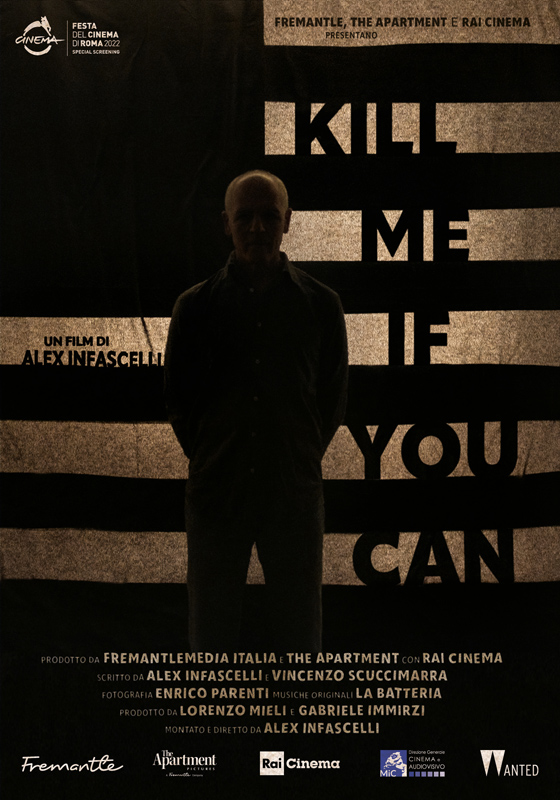
In my two previous documentaries, I dealt with the (complex) simplicity of two men like Emilio D'Alessandro and Francesco Totti. In telling the story of Raffaele Minichiello – Mini to his friends – I had to recalibrate my narrative approach, because here I was faced with an enigma. Raffaele, in his formally simple way, is not only indecipherable but also the unwitting bearer of truths that even he doesn't seem to possess. For the first time, I found myself without a written ending, a designated landing place, or perhaps in this case it's better to say: a safe runway. Instead, I chose to document our encounter, building around it a resonant tableau, not to embellish – I believe the interview alone would have been enough – but to understand, to catch my breath. The surprising archival material I found during years of research highlights how, even before me, others had already found his story interesting, and important to observe Raffaele in his world, so detached is he from it. In fact, whether he's framed in a B/W still shot in 16mm in the 60s, or a Rai video from the 80s, Raffaele always seems disconnected from the context and immersed in his own world, his own time, his own dimension. In this continuous "zooming in" and "zooming out" from the character, what emerged is the most honest of my works, not only in terms of approach or empathy with the protagonist, but from a narrative point of view. Some discoveries or plot twists appeared to me while I was already editing. And so, I let them fall where I chronologically found myself.