Maria
Movies
A Q and A with Pablo Larraín
What made the idea of a film about Maria Callas so appealing to you?
I was very lucky to grow up going to the opera house in Santiago with my family for many years. And I really, really loved it from a young age. Now it's funny and beautiful to think that we would see some of the operas that had made Callas so famous, even though she was no longer alive at this point. I was just in love and floating after seeing them and then we'd go back home and then my mom would say, ‘alright son, so you saw that, this is the real thing.’ She would play Maria Callas. I grew up with this presence of this next level of singer. Someone that had a voice of an angel. Then later of course I got to know more about her life. So after doing ‘Jackie’ and ‘Spencer’, it felt like the right ending for this process of these three movies. It's also the first movie about an artist and it creates a different dynamic for me personally on how to connect with the character and the story.
Did you understand the life of Maria Callas as something of an opera itself?
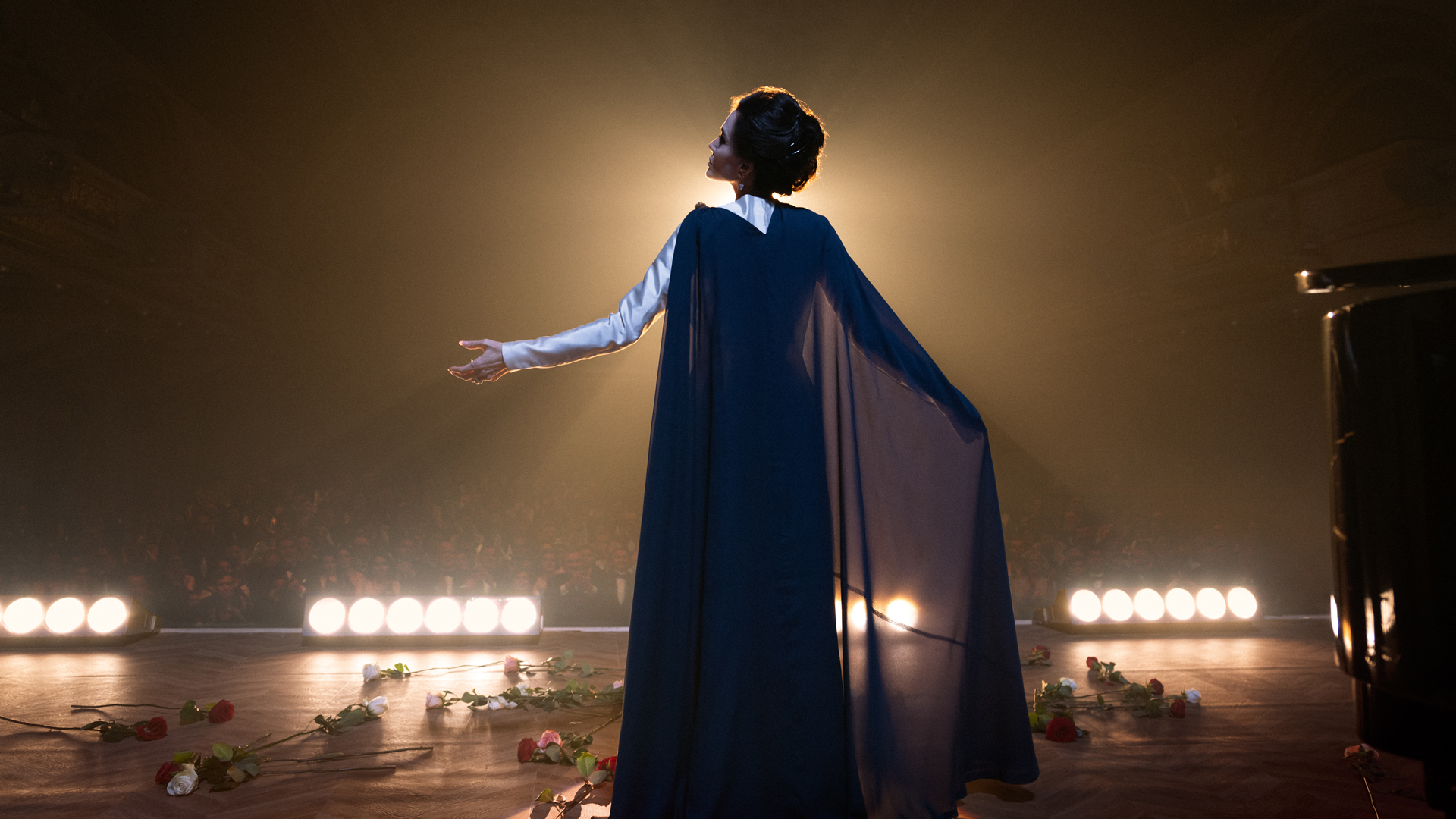
Many of the operas Maria Callas performed in are tragedies. So the main character that she played often is dead on stage in the last scene. The narratives of those operas are very different to her life, but I found there was always a bridge of relationship between Maria Callas and the characters that she played. One of the things that I talked to Steven Knight about at the very beginning was to understand that this movie is a movie about someone that becomes part of the tragedies that she played on stage. There's some sort of a hidden map in the film where the piece of music that we use, whether it's only orchestration or with vocals in it, is related to the moment in the film. They’re not just there because they worked where they are, they're there because they have a dramatic purpose. Opera is a form of transcendence and it's a form of expressing emotions that you cannot say with words.
You mention Steven Knight – you’ve collaborated again after he wrote ‘Spencer.’
Well, when I invited him to do this, I realized Steven was also a huge opera fan, so that was a good step. I went to him and said, ‘I think we should make a movie about the last week of her life.’ We did a lot of research on Maria’s life and the end of her life, how the interactions of the operas she sang could create parallels with her own life. So that was a good starting point. And then talking to Angelina and Steven, we all understood that it was a film about someone that was never a victim. We are talking about someone that is in control of her will and her destiny, who knows what she wants to do and how she wants to do it. Steven really understood her character and how strong she was.
What made you pick the end of Maria’s life to focus on?
Maria Callas was singing all her life for audiences, for others. And her personal life was always connected to her relationships. She was always trying to please someone, a relationship, a family member or a friend. And now in this film, at the end of her life, she decides to do it for herself. She's going to try to sing for herself. So this a movie about someone who is looking to find her own voice and understand her identity. It’s a celebration of her life.
Do you see Maria Callas as a survivor, given her tumultuous personal life?
I think she struggled a lot and she had very sad moments. But there are a few biographies and there's a certain number of things where they all agree, and that is that Maria Callas was someone who was only truly happy when she was on stage. That way she fulfilled her heart and her soul. So it's someone that at some point realizes that her voice is not going to be strong enough to be able to perform at the highest level, the only level she could ever accept. It describes the difficulties of someone who has lost that element that not only made her famous, but also that created who she was in all human levels. But we’re not looking at her with pity and I don’t think the audience would feel sorry for her. I think the audience will understand who she was and why we did it in the way we did with such a wonderful and infinite performance like Angelina has given.
What made Angeline Jolie the right actor to play Maria Callas?
There's something about people like Maria Callas, but also Angelina Jolie, these women have a physical presence on a stage, in front of a camera or even just in a room, and you feel the enormous amount of humanity they carry. There was no struggle for Angie to be Maria Callas and carry that weight, as she already has it. And then she also took preparing for the role so seriously – six or seven months of it. I said to her, ‘the best preparation you can have for this character, it is actually a process of getting to sing.’ Then there's also a level of fragility and sensibility and intelligence that Angelina has that can really make a difference. And you feel that she disappears into the role in a way that you can enter the film and quickly forget that you're looking at Angie. It requires a very powerful and immense talent, obviously, but also someone that has the dedication, the discipline and the vulnerability to do that.
Can you describe the process Angelina Jolie undertook to learn to sing opera?
This was the challenge, to make a movie about Maria Callas with her own voice, because why would you make it without it? It's an essential element of course. Angie had different stages in her preparation. At the start it was with opera singers and coaches that helped her have the right posture, breathing, movement and the accent. She was singing very specific operas or arias, and most of them are in Italian. You have to sing it properly and get to the right pitches, and that means being able to follow the melody and sing it properly. We recorded her voice, her breathing, everything. There are moments in the film when you hear Maria Callas in her prime, when most of what you hear is Callas, but there’s always a fragment of Angelina. And then sometimes, it’s more Angelina than Callas. It’s a multilayered track that has different voices. So Angelina really had to go for it – not only because it made the movie more possible in terms of the illusion, but to also create the right process for her as an actress.
You never considered just using Maria Callas’s voice?
I think it’s about being honest with the character and the process. To me it’s the wrong path to take when there’s a form of cynicism in the performance where the act is just trying to look right, get to the note and move the mouth in sync, etc, but they’ve never really experienced it in the right way. It could feel dangerously fake, not in the technicality of the singing, but the way that she inhabits the character. And I think there's an honesty in her that you can feel very transparently.
Can you describe the process of capturing Angelina Jolie’s voice?
The only way to do it was she had to really sing the music properly, be in sync with Callas, and sing out loud. So then when you bring the Callas voice in the mixing, it would match organically. There isn't a miracle kind of technology here. It's really about Angelina’s work and the way that we were able to record that and to capture the sound. Angelina was absolutely exposed to singing, sometimes in front of 200 people, or 500 extras and she had to sing out loud by herself, and all people would hear was Angie’s voice alone. I would have my headphones on, I would listen to the orchestration, a little bit of Callas, and a little bit of Angie, so I was sort of mixing live. But she was metaphorically naked, voice wise, in front of hundreds of people. And at the beginning it was hard for her. She was almost apologizing to the crew. But everyone was saying, ‘come on, it's amazing. Just keep going.’ And everyone loved her because she was not only doing well, but she was so brave.
Aristotle Onassis and JFK are characters that are connecting figures to your previous film ‘Jackie.’ Are the films linked?
Well, somehow, they are, because they were people that changed the perception of the last half of the 20th century. Maria and Jackie were very strong women that conducted life the way that they wanted, and I include Diana Spencer in this, and they had natural interactions and connections, not only through Onassis or JFK, but also mostly through the kind of world that they were living in and they related to it. It's a world that was very masculine and they needed to struggle to find their own space and they did it.
Did you have a greater understanding of ‘Maria’ in that aspect because of the study that you'd done for ‘Jackie’ as well?
Think, yeah, of course. It's a world where what Maria says to JFK when they meet, she says something like, ‘we are very lucky angels who belong to this very specific and fortunate group of people’ that can do anything they like. They are wealthy, they're famous, they have an incredible place in this world, but they can't get away from it. And the fact that they all belong to that group doesn't make them friends, but they belong to the same group of people. So there's something there that generation of people that saw the world with privilege, but also with authenticity and will.
Aside from music, was Aristotle Onassis the great love of Maria Callas’s life?
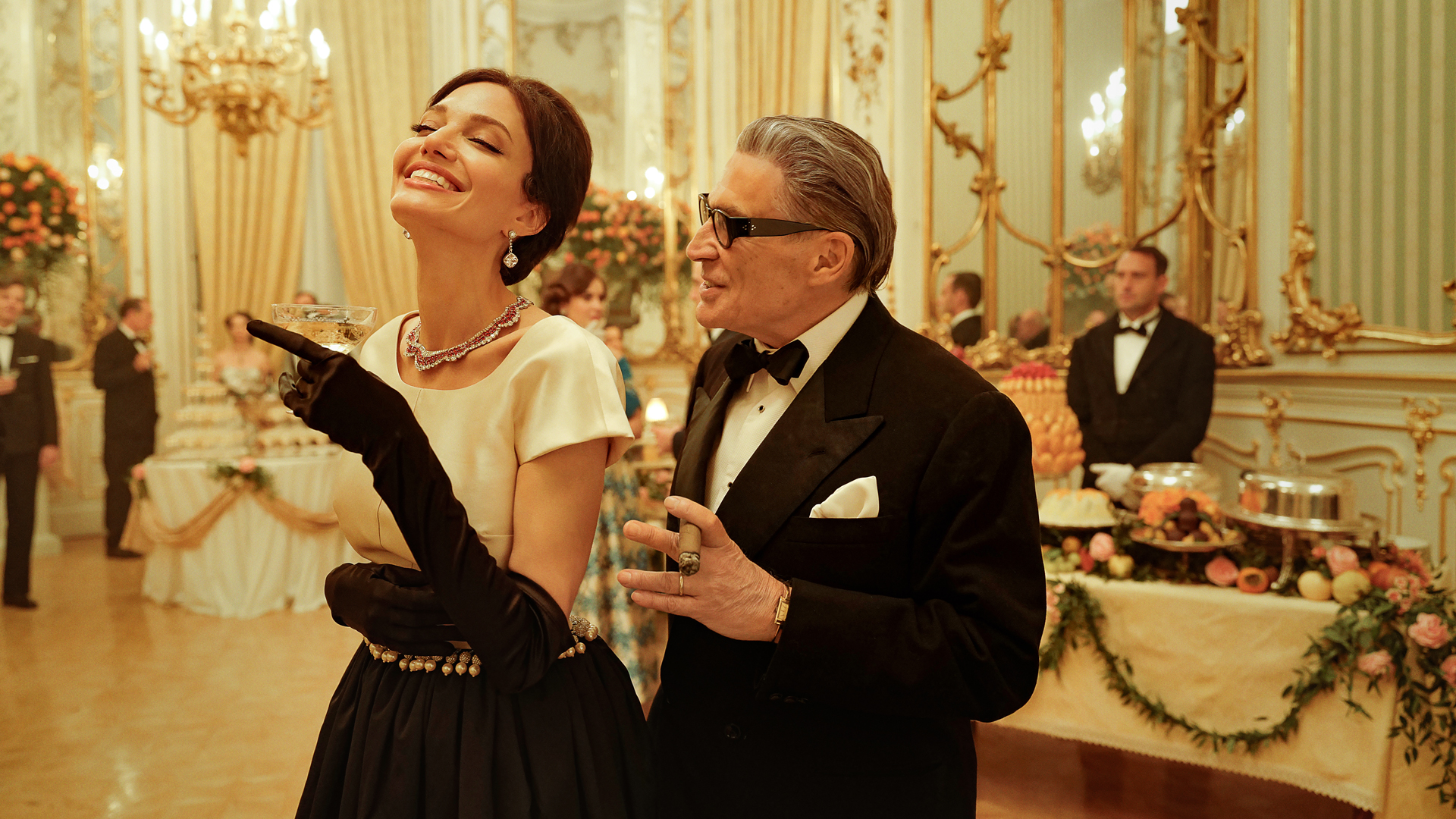
I think so. I think Aristotle Onassis was the love of her life, and I think they had different moments through their relationship. And I think they were very often close in the 70s after he split with Jackie. But it was somehow a toxic relationship I think as well. I don't think it was entirely healthy, and it’s in the film, where Maria is asked, ‘why would you be with such an asshole like Onassis?’ But a woman that is so strong sometimes wants to be with strong men because then she can be a girl again. That's what she explains. She could just disconnect with the world and let everything be under his control. But I do think there were moments of the relationship that weren't very healthy. But I also think they came to a peaceful understanding of who they were as individuals and as a couple by the end of their lives.
Do you think that some of the harsh public criticism she faced was because she was a woman in the spotlight?
Yes, it’s the fact that she was a woman, and she had a temper, and she wouldn’t tolerate unprofessional things. And she was criticized because of that. You would never say that about a man. Onassis had a huge temper. He did, but that's supposed to be okay because he was a man and she was a strong woman in times where that wasn't really tolerated, where she would just say what she thought. She was outspoken, she had no fear, and she would just say what she wanted to do and perform in the best way in her own capacity, the maximum capacity, and became an icon. People were just not used to that. But the paradox of that is that by her being criticized she became who she was, and she became this inaccessible diva, and it created a hunger for her music and for her private life. So she was on the covers of gossip magazines and opera magazines for four decades, and it was absolutely unusual.
You mentioned you’ve always been an opera fan. Would you like to see the film ‘Maria’ create greater curiosity to experience opera?
Opera started in the 16th century; they were folk music pieces that were sung in Italian, sometimes from the oral tradition. Then they became connected to popular stories at the time and were performed on stage. So it started as a very popular form of art that was for everyone. And then over the years it became a more sophisticated kind of art. But opera singers like Enrico Caruso, Maria Callas and Luciano Pavarotti, and perhaps now Andrea Bocelli, these are figureheads who really worked to put opera back in its rightful place. And it should be a very popular art form that should be accessible to the public. I think Callas was criticized by some when she made opera so popular. In the opera world, there are a few people who, through their snobbery, don’t want opera for the people, they don’t want to put it out there and they want to keep it for themselves. And I think the aim of ‘Maria’ is to have that operatic sensibility in a way that is popular. All the pieces in the film are beautiful and broad and have an ability to reach anyone.