Esterno notte
TV Series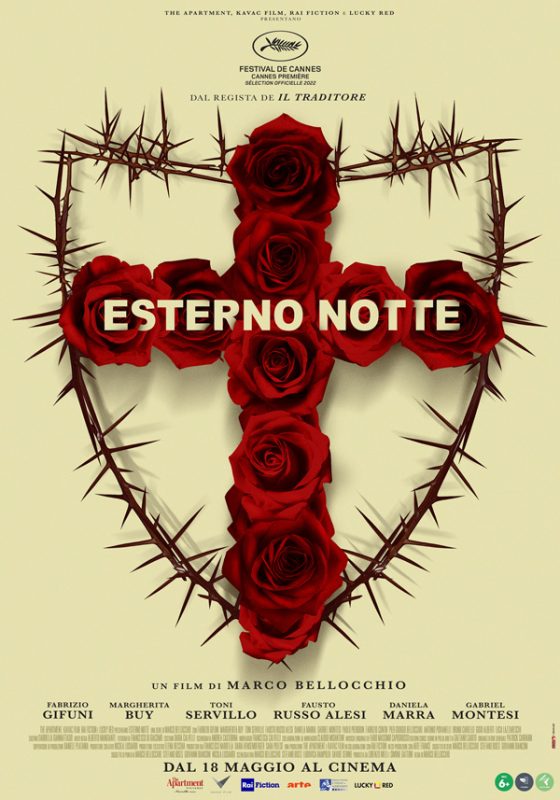
An article by Filippo Ceccarelli about Aldo Moro published on 20 September 2017 in the La Repubblica newspaper really struck me, along with the photos that accompanied it: one of President Moro on the beach in Maccarese in 1971, wearing a double-breasted suit and tie while surrounded by mothers, children and fathers in swimming costumes... And the other beneath it, of him on a motorboat driven by his wife, a strong, proud woman who took many a mystery to her grave. They were the exterior view, the counter-view of Moro in 1978, a prisoner of the Red Brigades, later executed by them, on whom I had made my first film on the subject, entirely shot in interior spaces, Good Morning, Night.
I felt it was important, at least for me (not for Italy, I have no such pretense), after The Traitor, to return to the subject. This time I wanted to create a series to tell the story of what went on in Italy during those 53 days outside the prison, only returning to it at the end, at the tragic epilogue. Exterior Night, because this time the protagonists are the men and women involved in various ways in the kidnapping who acted outside Moro’s prison: his family, his fellow politicians, various priests, the Pope, professors, diviners, the police forces, the secret services, Red Brigade members outside and in jail, even mafia men and infiltrators. Well-known figures, always on TV and in the press, but also unknown characters... And their stories, more private than public, during the kidnapping, their efforts to save him, or pretend to save him, openly or secretly boycotting every possible negotiation, including the tragi-grotesque séances and the trips abroad to consult psychics who may have had precious information on the whereabouts of the prison.
The great theatre of television during those 55 days, with millions of viewers glued to their screens, on which everyone was making predictions, publicly or in their hearts, with prayers said in churches and appeals made from St Peter’s for the salvation of the President. And many hoped he would be saved, including myself. Naively. That man, like Christ, “had to die”. So that nothing could change, not only in politics, but above all in the minds of the Italians. This work marks an exception to my rule of never returning to stories I’ve already told, but with ample justification,namely that the “night” I wanted to tell in this series was absent from Good Morning, Night.